Singapore is proposing a tenfold increase in fines for companies found responsible for transboundary haze pollution, raising the maximum penalty from S$2 million to S$20 million. The proposed amendments would also give authorities stronger investigative powers and allow restrictions on business dealings with companies suspected of contributing to forest fires.
The Transboundary Haze Pollution (Amendment) Bill was introduced in Parliament on Wednesday, 4 November 2026, by Minister for Sustainability and the Environment Grace Fu. It seeks to strengthen the existing Transboundary Haze Pollution Act (THPA), which was introduced in 2014 to hold companies accountable for activities overseas that cause or contribute to haze pollution in Singapore.
The Bill was introduced under a Certificate of Urgency signed by the President, allowing it to be debated and passed through all three parliamentary readings in a single sitting.
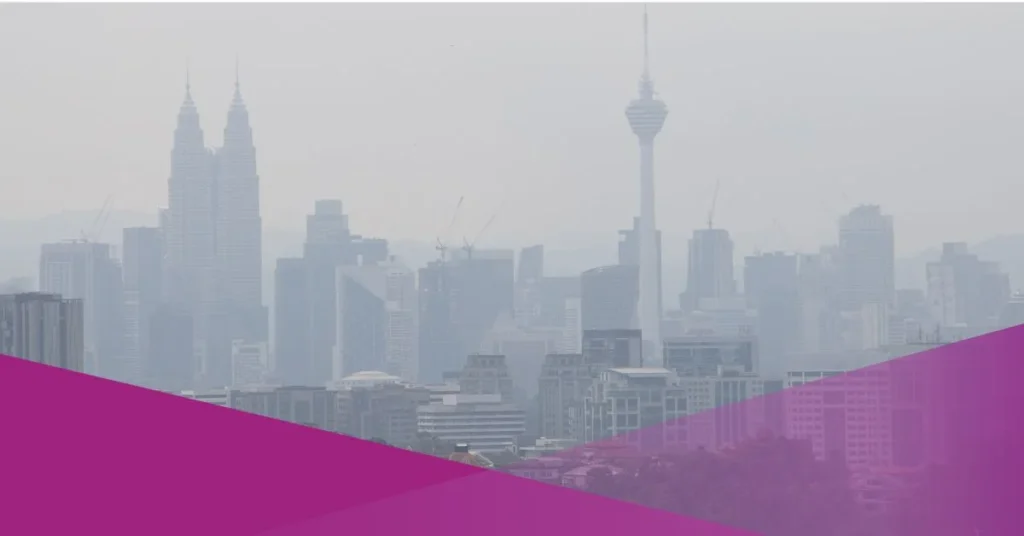
Fu said the recent haze episode demonstrated the need for stronger enforcement measures. Singapore experienced unhealthy air quality on 33 days and very unhealthy conditions on five days between 4 September and 25 October 2026.
“We need effective powers to protect Singaporeans and hold errant entities accountable,” she told Parliament.
Singapore Proposes Higher Fines and Stronger Investigation Powers
Under the existing THPA, companies convicted of causing or contributing to haze pollution can be fined up to S$100,000 per day, with a total cap of S$2 million. The proposed amendments would increase the daily fine to S$1 million and raise the maximum penalty to S$20 million.
Courts would also be allowed to calculate profits gained or losses avoided through an offence and impose an additional financial penalty based on those amounts. A separate civil penalty mechanism would enable the National Environment Agency (NEA), with the Public Prosecutor’s consent, to pursue penalties of up to S$10 million.
Companies would not face both civil and criminal penalties for the same case.
The amendments would also allow the Director-General of Environmental Protection to require companies suspected of having links to haze pollution to appoint independent assessors from the private sector. These assessors would investigate their operations, corporate relationships and other relevant information before submitting reports to the NEA.
Companies would have to pay for these assessments. However, Fu clarified that receiving a direction to appoint an assessor does not automatically mean a company has committed an offence. The findings would help authorities establish the facts and determine whether further enforcement action is necessary.
The Government would also be able to serve legal documents electronically or through alternative methods, including notices published on the NEA website and in the media. This is intended to address difficulties in reaching overseas companies.
Business Restrictions and Earlier Intervention Under Proposed Haze Law
Beyond criminal penalties, the proposed amendments would allow the Minister for Sustainability and the Environment to designate companies or individuals suspected of committing offences, failing to comply with official notices or receiving adverse assessment reports.
Designated entities could face restrictions on commercial activities, including the purchase and sale of goods and services and the provision of loans or other financial support. Restrictions involving financial institutions would be administered by the minister responsible for the Monetary Authority of Singapore.
Businesses that continue dealing with designated entities could face fines of up to S$1 million for each violation, with an additional penalty of up to S$100,000 for every day the breach continues.
The proposed legislation would also extend scrutiny to companies further along the supply chain, particularly those in the forestry and agricultural sectors. Businesses receiving official notices would be expected to take reasonable steps to ensure their commercial arrangements do not involve companies responsible for fires that pose a haze risk to Singapore.
Another important change would allow authorities to intervene before smoke reaches Singapore. Under the proposed amendments, action could be taken against companies linked to overseas fires that present a credible risk of causing haze pollution in the country.
The NEA would also be authorised to publish the names of entities that fail to comply with official notices or directions, strengthening public accountability.
Fu acknowledged that the proposed changes would not guarantee successful prosecutions or resolve the regional haze problem on their own. However, she said they would strengthen Singapore’s ability to hold responsible businesses accountable and protect the public from the effects of transboundary haze.