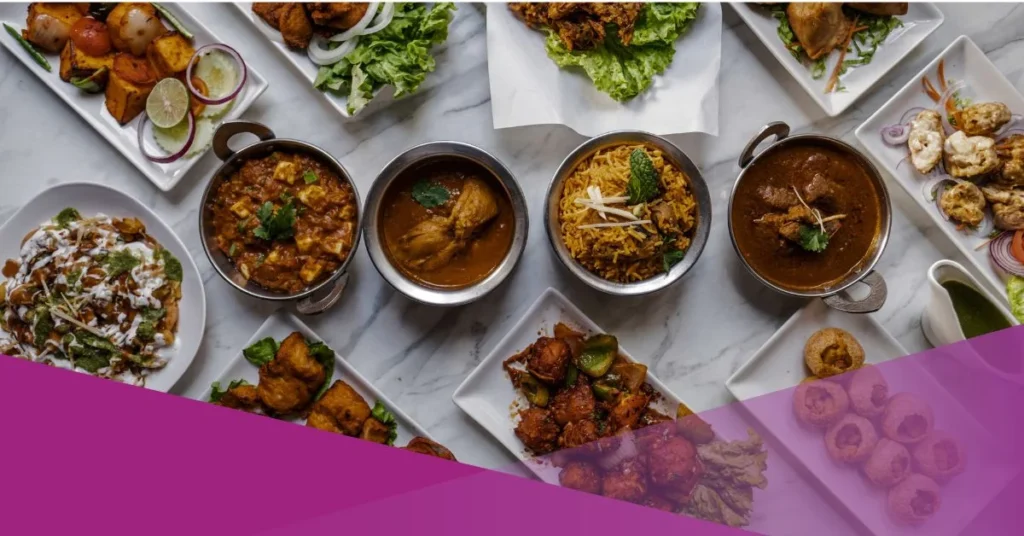
Some of Singapore’s most memorable food does not arrive with much ceremony. It might be a bowl of rice beside a deeply aromatic braise, a crisp little pastry filled with vegetables and prawns, or a plate of kueh in colours that look almost too beautiful to eat.
This is the world of Peranakan food.
Also known as Nyonya cuisine, Peranakan cooking grew from centuries of cultural exchange between Chinese communities and the Malay world. Chinese techniques meet Southeast Asian spices, coconut, tamarind and fermented ingredients, creating food that is intricate without ever feeling fussy.
For travellers, eating Peranakan cuisine is more than ticking another local dish off the list. It is a way into Singapore’s history, particularly in neighbourhoods such as Katong, Joo Chiat and the streets around Armenian Street.
What Is Peranakan Culture?
The Peranakan people, sometimes known as Straits Chinese or Baba-Nyonya, are descendants of Chinese communities who settled in the Malay Peninsula from the 15th century onwards. Over generations, Chinese and local Malay influences came together to form a distinct culture expressed through language, clothing, architecture, customs and food.
Men are traditionally known as Babas, while women are called Nyonyas. The latter name has become closely associated with the cuisine itself.
Singapore, alongside Penang and Malacca, became an important centre of Peranakan culture. Its influence can still be seen in the colourful shophouses of Katong and Joo Chiat, in family recipes passed between generations and in restaurants serving dishes that have changed surprisingly little over time.
A good place to begin is the Peranakan Museum at 39 Armenian Street, where galleries explore the history, traditions and material culture of Peranakan communities across Southeast Asia.
Afterwards, take a walk through the surrounding streets. Look closely at the shophouses, with their pastel facades, decorative tiles and elaborate details. Then head towards Katong and Joo Chiat, where Peranakan heritage becomes part of the everyday streetscape.
It is one of the more rewarding ways to understand the food before you eat it.
What Makes Peranakan Cuisine So Distinctive?
The soul of traditional Peranakan cooking is the rempah, a spice paste that provides the foundation for countless curries, braises and soups.
A traditional rempah may contain lemongrass, galangal, fresh turmeric, dried chillies, candlenut and belachan, or fermented shrimp paste. These ingredients are ground together before being fried slowly in oil until intensely fragrant and the oil begins to separate.
It is not fast food.
The process can take 30 to 60 minutes, and that patience is part of the flavour. Coconut milk, tamarind and palm sugar then bring richness, acidity and sweetness into the mix, creating the balance that defines so much Nyonya cooking.
Pork, chicken and seafood all have their place. Some dishes are fiery, others are earthy and savoury, while others lean towards sweetness. Together, they demonstrate just how broad Peranakan cuisine can be.
For travellers who want to go beyond the restaurant table, a hands-on cooking experience can offer another perspective. Booking Peranakan cooking activities lets you get closer to the techniques behind the cuisine, particularly the preparation of rempah.
5 Must-Try Peranakan Food in Singapore
A first Peranakan meal can be slightly overwhelming. There are unfamiliar names, unusual ingredients and enough dishes to make choosing one feel like an impossible task.
Start with these.
Ayam Buah Keluak
If there is one dish that belongs on a Peranakan food itinerary, it is ayam buah keluak.
Chicken is braised in a rich tamarind and spice gravy with buah keluak, the dark nuts of the Pangium edule tree. The nuts are fermented before they are used, producing an earthy, smoky and intensely savoury flavour.
The preparation is famously labour-intensive. The nuts require careful soaking and cleaning before their paste can be incorporated into the dish.
The result is unlike a conventional chicken stew. The sauce is dark, complex and deeply aromatic, with the distinctive flavour of buah keluak running through it.
For anyone looking for authentic Peranakan food in Singapore, this is a good place to begin.
Babi Pongteh
If ayam buah keluak is the dramatic dish, babi pongteh is the comfort food.
Pork belly and mushrooms are slowly braised with fermented soybean paste, palm sugar and garlic until the meat becomes exceptionally tender. The resulting sauce is savoury, gently sweet and wonderfully aromatic.
It is also relatively mild compared with some other Nyonya dishes, making it a particularly approachable introduction to Peranakan cuisine.
Traditionally associated with family gatherings and celebrations, babi pongteh has the quality of food that feels familiar even when you are tasting it for the first time.
Kueh Pie Tee
Small, crisp and almost dangerously easy to eat, kueh pie tee consists of delicate pastry shells filled with stir-fried jicama, carrot and prawn or crab.
Sambal chilli and lime add heat and acidity, while the contrast between the brittle shell and soft filling makes every bite more interesting than it has any right to be.
They are often served as starters or as part of a larger tok panjang spread, and are best eaten immediately while the shell is still crisp.
Ngoh Hiang
Think of ngoh hiang as one of Peranakan cuisine’s great little parcels.
Minced pork and prawn are seasoned with five-spice before being wrapped in dried beancurd skin and deep-fried until golden. The filling is fragrant, slightly sweet and savoury, while the exterior provides the necessary crunch.
Sliced into rounds and served with sweet chilli sauce, it works equally well as a snack, starter or accompaniment to rice.
It is also one of those dishes where a restaurant’s version can become a regular’s personal benchmark.
Nyonya Kueh
Peranakan cuisine is not only about curries, braises and sambal. Its sweets deserve their own itinerary.
Nyonya kueh covers a broad family of colourful steamed and baked sweets, including kueh lapis, ondeh ondeh and pulut hitam.
Pandan, coconut, palm sugar and butterfly pea flower bring fragrance, colour and sweetness to these small treats. Some are chewy, some creamy and some delicately layered.
Look for dedicated kueh shops and stalls around Katong and Joo Chiat. They make an excellent afternoon stop after exploring the neighbourhood.
5 Best Peranakan Dining Spots in Singapore
The best Peranakan restaurants in Singapore range from deeply traditional family-run establishments to polished restaurants that reinterpret the cuisine for a contemporary audience.
Here are five dining spots worth putting on your list.
Candlenut: Modern Peranakan Dishes in Dempsey Hill
Candlenut occupies a special place in Singapore’s dining landscape. It was the world’s first Michelin-starred Peranakan restaurant, and chef Malcolm Lee has built its reputation around taking familiar Nyonya flavours and presenting them through a more contemporary lens.
Located at Block 17A Dempsey Road, the restaurant sits within the leafy Dempsey Hill enclave, where the surroundings feel far removed from the city’s glass towers.
The cooking is rooted in tradition but not restricted by it. Familiar ingredients and recipes are treated with refined technique, creating what has become one of Singapore’s most recognisable expressions of modern Peranakan cuisine.
For travellers who want a more polished introduction to the cuisine, Candlenut makes a compelling case.
Location: Block 17A Dempsey Road
Godmama: A Contemporary Take on Peranakan Comfort Food
Godmama takes a more casual approach to Peranakan dining, bringing familiar Nyonya flavours into a contemporary restaurant setting.
It is the kind of place suited to travellers who want to explore the cuisine without committing to a formal tasting experience. Traditional flavours sit comfortably alongside a more modern presentation, making it an approachable stop for lunch or dinner.
The appeal is simple: Peranakan food that feels connected to its roots while fitting naturally into Singapore’s modern dining scene.
For first-time visitors, Godmama is a useful introduction to the idea that Peranakan cuisine can evolve without losing its identity.
Violet Oon Singapore: A Modern Classic
Few names are as closely associated with Singapore’s heritage cooking as Violet Oon.
Her restaurants have become important ambassadors for Peranakan cuisine, presenting traditional dishes in settings that range from contemporary shopping districts to heritage buildings.
The ION Orchard restaurant, located on Level 4 of ION Orchard, is particularly convenient for travellers combining a meal with an afternoon of shopping. Meanwhile, National Kitchen by Violet Oon at the National Gallery Singapore offers a more atmospheric setting inside the former Supreme Court and City Hall complex.
The menu brings together Peranakan classics and other Singaporean heritage dishes, making it a useful choice when you want to explore more than one strand of the country’s food history in a single sitting.
The Blue Ginger: Traditional Peranakan Cuisine in a Shophouse
On Tanjong Pagar Road, The Blue Ginger has been part of Singapore’s Peranakan dining landscape since 1995.
The setting is part of the attraction. Housed within a traditional shophouse, the restaurant offers a more intimate experience that suits the food.
Its menu stays close to traditional recipes, with dishes such as beef rendang, ngoh hiang and ayam buah keluak among the highlights.
For travellers interested in experiencing Peranakan cuisine without the formality of a fine dining restaurant, The Blue Ginger offers a strong middle ground.
Location: Tanjong Pagar Road
Chilli Padi Nonya Restaurant: Peranakan Food in Joo Chiat
If you want your Peranakan meal to feel connected to the neighbourhood around it, head to Joo Chiat.
Chilli Padi Nonya Restaurant at 11 Joo Chiat Place sits within one of Singapore’s most recognisable Peranakan districts. Its menu focuses on traditional Nyonya flavours, with house-made sambal belacan and cabbage rolls among its notable dishes.
The restaurant underwent a refurbishment in 2026, but its recipes remained unchanged.
That is precisely the appeal. You can spend the afternoon exploring Joo Chiat’s colourful shophouses, stop for a Peranakan meal and continue walking afterwards, letting the architecture and food tell the same story from different angles.
Location: 11 Joo Chiat Place
True Blue Cuisine: A Taste of Peranakan Heritage
At 49 Armenian Street, True Blue Cuisine offers perhaps one of the most atmospheric introductions to traditional Peranakan dining.
The restaurant sits beside the Peranakan Museum, and its interior is filled with antique furniture, porcelain and other objects that evoke a traditional Peranakan home.
The food follows the same philosophy. Recipes remain firmly rooted in tradition, with ayam buah keluak and ngoh hiang among the dishes to look for.
It is particularly well suited to a cultural afternoon. Visit the museum first, wander through the surrounding heritage streets, then sit down for a meal that continues the story.
Location: 49 Armenian Street
A Peranakan Food Journey Through Singapore
The beauty of Peranakan food is that there is no single way to experience it.
You can start with a plate of kueh pie tee in a restaurant, discover ayam buah keluak for the first time, spend an afternoon exploring Joo Chiat’s shophouses or finish the day with a box of colourful Nyonya kueh.
You can also take the more deliberate route: visit the Peranakan Museum, explore the historic neighbourhoods, book a cooking experience and then sit down to a long meal.
That is perhaps the best way to approach Peranakan cuisine in Singapore. Slowly.
After all, a cuisine built around patiently ground rempah was never going to reward rushing!